

Planning to open a new restaurant or expand the menu and looking for a long-term side dish supplier—a Google search yields hundreds of unfamiliar factories; asking others in the industry provides conflicting answers. For restaurant owners venturing into B2B procurement for the first time, figuring out "where to start finding a restaurant side dish supplier" is the most challenging first hurdle.
Table of Contents
ToggleIn fact, large and medium-sized chain stores already have a mature set of standard operating procedures (SOPs) for sourcing factories.Instead of using a single channel, we will cross-reference and verify data through three channels: B2B platforms, food exhibitions, and factory visits.This article aims to minimize the risk of making the wrong choice. From a practical perspective of chain store procurement, it breaks down the advantages and limitations of three supplier sourcing channels and suggests a combination strategy for medium to large-sized restaurants.
B2B platform search: What stage of buyers is it suitable for?
B2B platforms are suitable as a starting point for "initial screening," allowing for quick comparison of product specifications, certification information, and price ranges from multiple suppliers. However, the information on these platforms is limited, and decisions should not be made solely based on the platform's information.
Suitable stageIn the early stages of procurement decision-making, we are still in the process of understanding what options are available in the market.
Advantages:
• Compare multiple suppliers at once to quickly establish a comprehensive market overview
• You can filter by keywords (such as certification type, product category, production capacity).
• Direct access to contact information for quick and easy communication
limit:
• The information on the platform has been edited by the suppliers themselves and may have been embellished.
• Unable to see the actual factory conditions, production capacity, and quality control processes
• Lack of on-site communication makes it difficult to assess the quality of supplier services.
Practical adviceFirst, use a B2B platform to screen 5-8 suppliers that meet the basic criteria and create a preliminary list. This serves as the basis for subsequent on-site evaluations, not the final decision.
Besides platform searches, what other common channels are there for communication?
Besides B2B platforms, in practice, buyers also have other channels to contact suppliers, including online inquiries through official channels, food trade shows, and recommendations from peers or agents. Different channels are suitable for different stages of the procurement process, and buyers can choose the appropriate communication window based on their preferred approach.
Taking Lanyang Foods as an example, its official LINE account is divided into two windows: B2C consumer consultation and B2B procurement contact. If a buyer inquires through the B2C channel first, such as first contacting Lantian Vegetarian Foods' retail products, the sales team will assist in referring them to the B2B window, so they don't need to find the right window from the beginning.
There are several practical advantages to contacting the original manufacturer directly. Taking Lan Yang Foods as an example, they offer a wide variety of regular products, and even the same side dish comes in different flavors and sizes; ordering directly from Lan Yang results in more favorable prices and faster delivery.
In addition, Lan Yang Foods' business department also proactively develops potential customers. This means that even if the purchaser has not yet made an active contact, they may still be contacted through the business department's development channels, creating a two-way contact opportunity.
Why are food exhibitions such crucial occasions for direct contact?
Food exhibitions are key occasions for "directly contacting suppliers and tasting samples on-site." Large-scale exhibitions such as the Taipei International Food Show and the Asia Food Show typically gather a large number of food suppliers, making them highly efficient opportunities for buyers to contact multiple suppliers at once.
Suitable stageIn the mid-stage of the procurement decision-making process, we have a preliminary list of suppliers and would like to learn more about the actual products and business channels.
Advantages:
• Sample the product on the spot and experience its quality firsthand.
• Communicate directly with business stakeholders to quickly assess their level of expertise.
• Can reach 5-10 suppliers per day, highly efficient.
• Trade shows usually offer limited-time discounts or trial order programs.
limit:
Business is usually very busy during exhibitions, and time for in-depth discussions is limited.
• The exhibition environment does not represent the actual condition of the factory.
• The frequency of the exhibition is limited (usually 1-2 times a year).
Practical adviceBefore the trade show, do your homework: make a list of target suppliers and prepare your procurement needs information (estimated annual usage, menu direction, and budget range). This will allow you to obtain the most useful information within the limited time.
What are the key points to look for during a factory site visit?
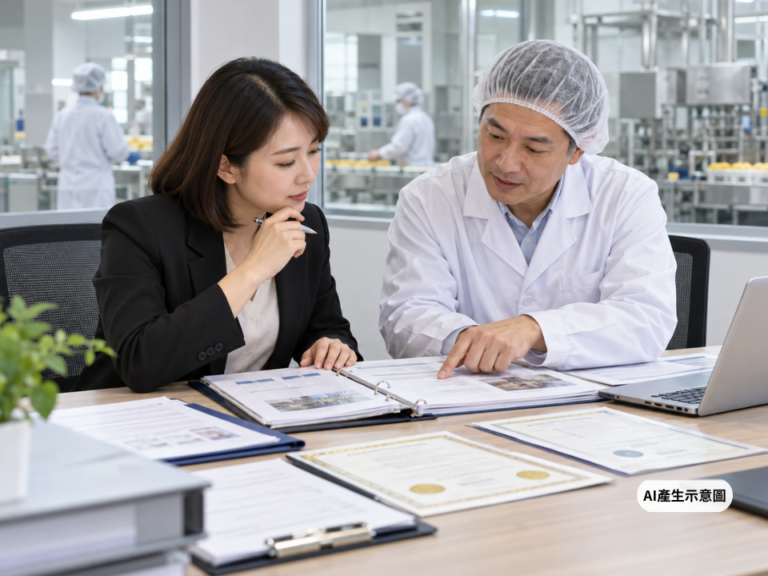
Factory site visits are a crucial verification process before final decision-making, a step that cannot be replaced by the previous channels. Chain buyers almost always arrange on-site factory visits before signing long-term contracts to verify the supplier's actual capabilities.
Suitable stageIn the later stages of the procurement decision-making process, the number of candidate suppliers has been narrowed down to 2-3, and we are preparing to make a final decision.
Advantages:
• Directly observe the actual factory conditions (production lines, quality control, cold storage, office environment)
• Direct conversations with personnel from different roles in R&D, quality control, and sales.
• Observe the supplier's corporate culture and management maturity
• To build a foundation of trust for long-term cooperation
Key points to look out for during a factory visit:
Observational direction | Specific inspection items |
Production Environment | Are the production lines clearly zoned and are hygiene management measures implemented? |
Quality control process | Quality control personnel allocation, sampling frequency, and abnormality handling records |
Warehouse equipment | Cold storage temperature control records |
File Management | Are the certification certificates, inspection reports, and specifications complete? |
Practical adviceMake an appointment in advance before visiting the factory and clearly express the key points you want to see to the supplier. Professional suppliers will arrange a complete factory visit process and will not deliberately avoid certain areas. If a supplier refuses to conduct an on-site visit or restricts the scope of the visit, this is an important warning sign.
What are the recommended portfolio strategies for buyers of medium to large-sized restaurants?
For medium to large-sized restaurant buyers, a three-stage process is recommended: initial screening through B2B platforms or official channels → food exhibitions or business negotiations → on-site factory visits. This process typically takes 2-4 weeks but significantly reduces the risk of making incorrect decisions.
Phase 1 (Week 1) | Initial Contact| Create an initial list of 5-8 suppliers through B2B platforms, supplier official LINE or website inquiry windows, and screen out candidates that meet the basic requirements based on certification, production capacity and product categories.
Phase 2 (Weeks 2-3) | In-depth Business Communication| Further communicate needs and request samples for tasting through food exhibitions or video conferences arranged by the business department. This stage narrows down to 3-5 candidate suppliers.
Phase 3 (Week 4) | Factory Site Visit and Trial OrderArrange on-site visits to the final 2-3 candidate suppliers, and simultaneously launch small-scale trial orders. During the trial order period, verify the four aspects of products, supply, service, and documentation, and ultimately decide on long-term partners.
In addition to the three stages mentioned above, buyers of medium to large-sized restaurants typically consider two other items:
Project 1 | Supplier Qualification Review |In the initial contact stage, first confirm whether the factory registration and basic food certifications are complete. If the qualifications are not met, they will be directly excluded, so there is no need to spend time on tasting and factory visits later.
Project 2 | Please provide suppliers with high-quality partner manufacturers |Ask the other party to provide information on their long-term clients as a reference, to understand what types of catering businesses the supplier has served and for how long, as a basis for judging stability.
Through cross-verification via three channels, coupled with qualification review and reference to partner manufacturers, the initial investment of 2-4 weeks selects not only a supplier with a suitable price, but also a partner that can provide long-term supply and maintain stable quality.
FAQ
Q1 | Can a small independent restaurant select suppliers online if it doesn't have time to attend trade shows or visit factories?
Yes, but it's recommended to have in-depth discussions with the business team via video conference and request complete certification, inspection, and case information. Independent restaurants typically have smaller purchasing volumes, so the financial impact of choosing the wrong supplier is relatively manageable, but it's still important to avoid making decisions based solely on online presentations.
Q2 | What should I do if I'm unsure which contact person to reach?
Don't worry about going to the wrong window. Taking Lanyang Foods as an example, even if the initial inquiry is made through a B2C consumer channel, the business team will assist in referring the inquiries to the corresponding B2B window to ensure that the demand is accurately matched.
Q3 | If a factory is found to be unclean or has chaotic processes during a factory visit, should it be ruled out immediately?
We strongly recommend ruling this out. The core competitiveness of restaurant side dish suppliers lies in food safety management and consistent quality, both of which are reflected in the daily condition of the factory. If the factory is not clean and tidy on the day of your visit (when the supplier knows you're coming), the usual conditions will only be worse.
Conclusion | Finding a factory isn't about finding the cheapest option, it's about finding a long-term partner.
When looking for a restaurant side dish supplier, don't look for the cheapest or the biggest; look for...Able to accompany the restaurant's growth in the long termThe partners to be considered. B2B platforms, business contacts, food exhibitions, and factory visits each have their advantages, and only by using them in combination can a complete basis for judgment be established.
Lanyang Foods welcomes interested food service buyers to contact our sales team through our official website or LINE account to arrange online communication or a factory visit. With 40 years of B2B supply experience, a complete certification and quality control system, a wide selection of regular items, and fast delivery for direct orders, we look forward to establishing a long-term partnership with you.
Recommended restaurant side dish supplier: [Lanyang Foods]
Founded in 1984, Lan Yang Foods has now entered its 40th year. It is not only a Taiwanese brand but also an internationally renowned enterprise. We have built a food safety protection network in sync with the world, and have fully implemented… FSSC 22000,ISO 22000,HACCPFurthermore, through extremely rigorousEUCertified by the EU Food Safety Management System, and successfully exported to over 30 countries. Furthermore, many products have passed cleanliness verification, Halal certification, Kosher certification, and have won international flavor awards. We uphold the highest international standards to safeguard the trust of our domestic and international partners, ensuring that every batch of our products shipped overseas becomes a source of pride for Taiwan.
At Lan Yang Foods' production plant, every step of the process strictly adheres to Good Food Practices (FGMP) and Standard Sanitation Operating Procedures (SSOP). From farm to table, through the most rigorous and meticulous quality control, we ensure that every consumer can experience genuine safety, hygiene, and peace of mind while enjoying the delicious food.
If you have group purchase or wholesale needs, please feel free to contact Lan Yang Foods. You can call 02-2586-2555 #128 or add us as a friend on LINE on the right to inquire.