

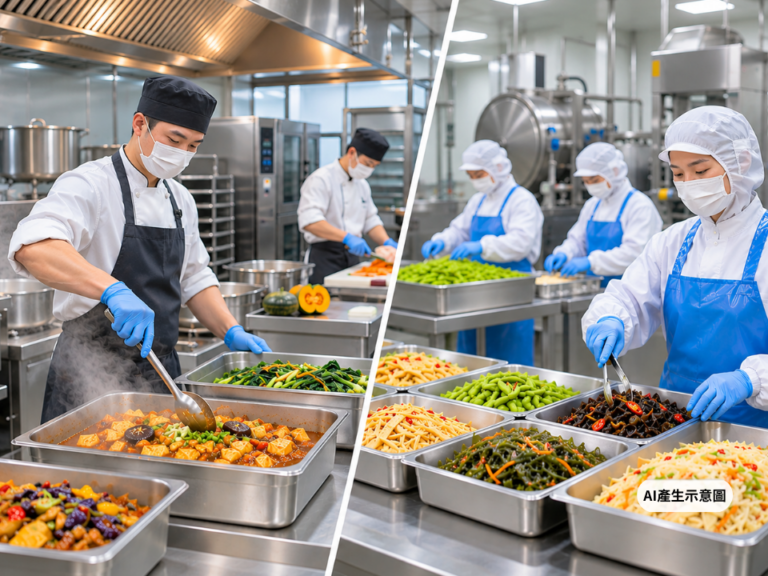
"We already have a central kitchen, do we still need to outsource side dishes?" This is a question that is often discussed internally by many chain restaurants that are planning or have already built a central kitchen. Central kitchens have high investment costs and require time to plan production capacity. If you already have a central kitchen, your first instinct is to think, "Is it more cost-effective to make all the items yourself?"
Table of Contents
Toggle
But in practice,Central kitchens and side dish suppliers are never in a replacement relationship, but rather a division of labor.This article breaks down why chain restaurants, even with central kitchens, often choose to outsource side dishes, and the specific differences between the two in terms of items and processes.
Are central kitchens and side dish suppliers dealing with the same thing?
No. Central kitchens focus on the pre-processing and standardization of main dishes and staple foods, while side dish suppliers provide side dishes that complement the main dishes.The two items are different and do not conflict in essence..
It's unlikely that chain restaurants would put all their items into a central kitchen, nor is it necessary. The core value of a central kitchen is to standardize the main dishes, which have the largest production volume and are most critical to production efficiency, ensuring that the quality of main dishes is consistent across all stores. As for side dishes, which are numerous, have diverse flavors, and are used in relatively small quantities, it is more cost-effective and efficient to entrust them to professional side dish suppliers.
What are the differences in the production processes between a central kitchen and a side dish supplier?
Central kitchens and frozen ready-to-eat side dish suppliers actually follow two different process logics, which is why they can coexist and not replace each other.
Central kitchenThe typical approach is "pre-processing"—the ingredients to be served are washed and prepared in advance, possibly undergoing simple cooking and then refrigerated for storage, before being finally cooked or reheated at the restaurant and served. This process is suitable for staple food items with large serving volumes that require on-site final preparation.
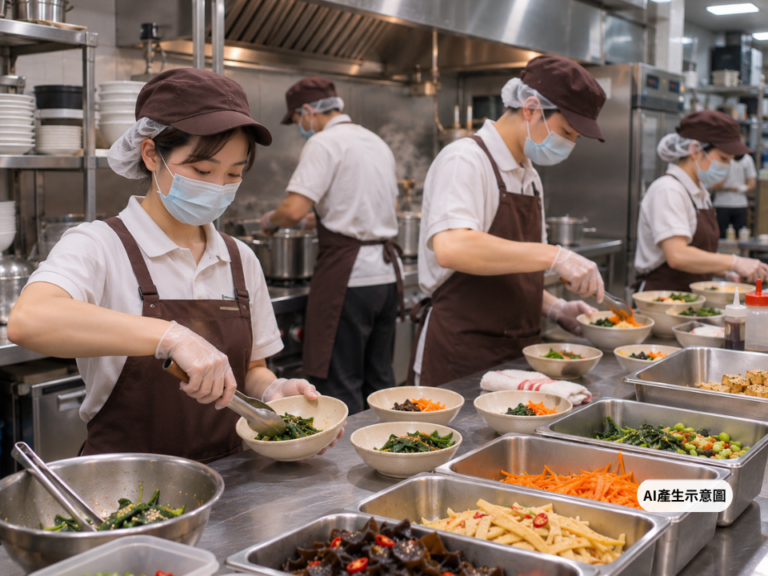
Small vegetable supplierThey take the "fully seasoned and then frozen" approach—the products undergo all seasoning and cooking processes at the factory, and are then frozen for storage. At the retail level, customers only need to thaw and unpack them to serve directly, without any additional cooking steps. This process is particularly suitable for small dishes with a large number of items and relatively small serving sizes per item.
The two process logics are designed for different types of products. Using both models simultaneously is actually the most reasonable way to allocate resources in chain restaurants.
Why do chain restaurants still tend to outsource side dishes even though they have central kitchens?
Even though chain restaurants have established central kitchens, they still tend to outsource side dishes to professional suppliers, mainly for three reasons:A more cost-effective cost structure, a more streamlined kitchen workforce, and easier maintenance of product diversity..
Reason 1 | More cost-effectiveFor frozen ready-to-eat side dish suppliers, the customer receives a fixed cost – regardless of fluctuations in the raw material market, the supplier's price is usually relatively stable, unless there is a significant price increase during the production season, and even then, it won't be a substantial increase. This makes cost accounting easier for chain restaurants to manage than investing in manpower and equipment to process side dish items themselves.
Reason 2 | Streamlined kitchen staffThe catering industry is currently facing a widespread labor shortage, with many chefs unwilling to spend time on the tedious preparation of side dishes—in addition to preparing main courses, they also have to spend extra time preparing side dishes, which is a considerable burden on on-site staff. Using frozen ready-to-eat side dishes that can be thawed and unpacked can directly save manpower and time in this preparation work.
Reason 3 | It's easier to maintain product diversity.Side dishes typically come in a large number and vary greatly in flavor. If all of them were handled by a central kitchen or retail outlet, the required manpower and management costs would multiply with the number of items. By outsourcing to professional suppliers, a diverse selection can be quickly obtained from their existing product lines, eliminating the need to develop each side dish from scratch.
Under what circumstances would a chain restaurant consider including side dishes in its central kitchen?
While outsourcing side dishes is more cost-effective in most cases, there are a few situations in which chain restaurants may consider incorporating some side dishes into their central kitchen. These situations include: the brand has specific exclusive recipes that need to be kept strictly confidential; the quantity of a single item is extremely large; the economies of scale from self-production have exceeded the cost of outsourcing; the central kitchen has significant spare capacity; and it already has the relevant equipment and manpower.
However, even in these scenarios, most chain restaurants still adopt a hybrid model of "some items are made in-house and some are outsourced," rather than the extreme choice of either complete in-house production or complete outsourcing. The core concept of professional division of labor is not an "either/or" choice, but rather finding the most suitable approach based on the characteristics of each item.
FAQ
Q1 | If the restaurant is not large and does not yet have a central kitchen, should we consider building one ourselves?
It depends on the number of items and the scale of food preparation. If there are not many stores and the main food items are relatively simple, there is usually no need to rush to invest in the construction costs of a central kitchen; for side dishes, it is better to take the lead in outsourcing to professional suppliers and concentrate the kitchen staff on the core food preparation process.
Q2 | Will using side dish suppliers make the menu lose its uniqueness?
Not necessarily. Professional suppliers usually have a diverse selection of items and can also collaborate on customized seasonings to ensure that side dishes match the brand's flavor profile. The uniqueness of a menu usually comes from the main dishes and the overall dining experience design of the brand. As supporting items, the stability and convenience of side dishes are often more important than originality.
Q3 | Will using a central kitchen and side dish suppliers at the same time cause chaos in kitchen management?
No, as long as the division of labor for each item is clear, it will be fine. The main dishes handled by the central kitchen and the side dishes provided by the side dish suppliers can usually be clearly separated in terms of storage location and food preparation process. The store staff only need to be familiar with their respective processing methods (such as the final cooking of central kitchen items and the thawing and unpacking of side dishes), which will not increase the management complexity.
Conclusion | Division of labor is not about replacement, but about putting resources in the right places.
Central kitchens and side dish suppliers are not competing options, but rather a division of labor handling different types of items. Central kitchens focus on standardizing staple foods and ensuring core quality; side dish suppliers supplement menu diversity with stable costs and convenient formats. Chain restaurants don't need to choose between the two, but rather find the division of labor that best suits their brand.
Lanyang Foods, a long-time professional food manufacturer for chain restaurants, provides frozen ready-to-eat side dishes that can be thawed and served immediately, allowing clients' central kitchens or stores to focus on their core staple food items. Please contact our sales team through our official website to learn more about cooperation details.
Further reading
Recommended restaurant side dish supplier: [Lanyang Foods]
Founded in 1984, Lan Yang Foods has now entered its 40th year. It is not only a Taiwanese brand but also an internationally renowned enterprise. We have built a food safety protection network in sync with the world, and have fully implemented… FSSC 22000,ISO 22000,HACCPFurthermore, through extremely rigorousEUCertified by the EU Food Safety Management System, and successfully exported to over 30 countries. Furthermore, many products have passed cleanliness verification, Halal certification, Kosher certification, and have won international flavor awards. We uphold the highest international standards to safeguard the trust of our domestic and international partners, ensuring that every batch of our products shipped overseas becomes a source of pride for Taiwan.
At Lan Yang Foods' production plant, every step of the process strictly adheres to Good Food Practices (FGMP) and Standard Sanitation Operating Procedures (SSOP). From farm to table, through the most rigorous and meticulous quality control, we ensure that every consumer can experience genuine safety, hygiene, and peace of mind while enjoying the delicious food.
If you have group purchase or wholesale needs, please feel free to contact Lan Yang Foods. You can call 02-2586-2555 #128 or add us as a friend on LINE on the right to inquire.