

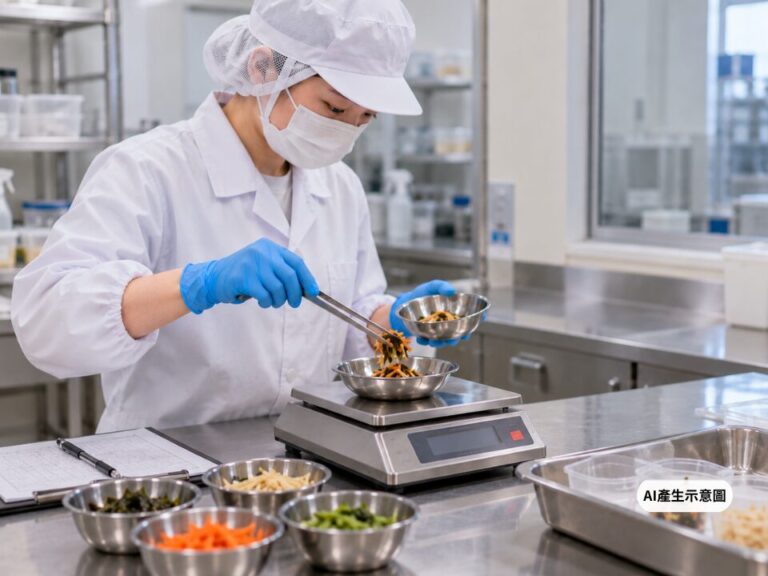
The key lies in batch control and quality evaluation systems.
The same signature side dish is described as "just right" by regulars at the Taipei branch, but customer complaints at the Taichung branch say it's "too salty and the texture is wrong." When the chain headquarters receives such feedback, their first instinct is often to suspect that the store's operations are not up to par—but the real answer usually lies further upstream.
Table of Contents
Toggle
Natural ingredients vary in moisture content, flavor, and color from batch to batch. If suppliers do not perform batch calibration, no amount of standardization at the retail level can compensate for this.The key to maintaining consistent flavor across multiple stores has never been in the stores themselves, but rather in batch control and quality assessment systems at the supplier level..
This article breaks down the SOPs for quality consistency of professional suppliers from the perspective of chain store procurement, and provides specific methods for identifying the strength of suppliers of "chain restaurant side dishes".
What is the real reason for the inconsistent taste across different stores?
Inconsistent flavors across multiple stores are mostly due to batch differences at the supplier level, rather than variations in store operations.
Natural ingredients can vary in moisture content, flavor, and color from batch to batch. If the supplier does not perform batch calibration, different batches of products delivered to different stores will result in flavor discrepancies.
In food manufacturing, each batch of natural ingredients will be different—seasoning is not something that can be achieved by simply putting in a fixed amount of ingredients and seasonings.The weight, moisture content, color, and flavor of raw materials may change after processing. On-site personnel must be able to detect abnormalities and make necessary adjustments and evaluations according to standards.This is firsthand practical knowledge accumulated by Lanyang Foods through long-term service to international chain clients.
This means that even if the formula 100% is the same and SOP 100% is followed, as long as there are batch differences in the raw materials themselves, the final product may have different flavors. No matter how standardized the retail end is, it cannot compensate for batch differences at the supplier end.
Key points to identify:If a supplier tells you, "Our formula is very standard and there will be absolutely no difference"—this is actually a warning sign! Because natural raw materials will naturally have batch variations, and suppliers who acknowledge and manage these variations are the truly professional manufacturers who have supplied on a large scale.
How many inspection checkpoints do professional suppliers go through from receiving goods to shipping them?
Professional suppliers typically implement batch control, from raw material intake to finished product shipment, involving a complete inspection process rather than just a single sampling inspection at the final product stage.
Taking Lanyang Foods as an example, a product goes through four stages from raw material intake to final production:Incoming inspection (randomly select 2-3 boxes for sorting, weighing, and thawing inspection) → Manual sorting → Small-scale trial run (small-batch flavor and ingredient testing) → Large-scale trial run (scale-up to mass production testing)Only after confirming that there are no problems at each stage can mass production begin, and the entire process takes about one month.
If the product's taste or condition deviates from expectations during the trial run, it will not be released prematurely. Instead, the formula or process will be readjusted and the product will be tested again—usually taking about 1-2 weeks to remake, assuming sufficient raw materials. This insistence on "preferring customers to wait an extra 1-2 weeks rather than sending substandard goods" is the core of the chain system's trust in quality.
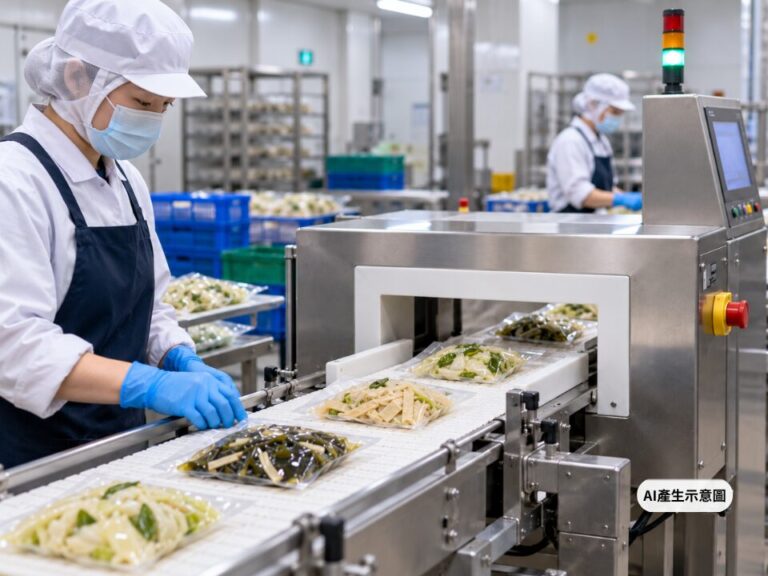
Dedicated personnel are also on-site to handle trial runs and quality assessments. During the raw material acceptance phase, a double check is implemented – manual selection followed by machine screening. The metal detector is calibrated daily with test kits to ensure proper functioning. This routine, daily practice that can be verified on-site by purchasing staff is far more convincing than vague quality assurance statements.
How can chain store buyers identify suppliers who can truly deliver consistent quality?
Chain buyers can quickly identify a supplier's quality control capabilities by asking a few specific questions, rather than just listening to verbal promises.
Question 1 | "How many inspections does the raw material undergo from arrival at the factory to shipment?"
Able to answer the complete process (such as specific steps for incoming inspection, trial production, and quality evaluation) → Mature quality control system
Simply answering "We have quality control" may render the system ineffective.
Question 2 | "If the test drive reveals that the quality does not meet expectations, how do you handle it?"
The answer is "readjust and remake" → clear quality standards.
The answer is "ship when it's almost done" → immediately ruled out.
Question 3 | What is the mechanism for controlling foreign objects or impurities?
The specific methods can be provided (e.g., manual selection + metal detection, daily calibration) → Ensuring implementation.
Simply saying "We are very strict" → without concrete evidence.
Question 4 | "How long will it take to remake it?"
Being able to answer with a specific number of days (e.g., around 1-2 weeks) indicates confidence in managing one's production line.
Vague mention → There may be no real contingency plan
Long-term partnerships with chain customers are the most direct proof of a supplier's stability.
Once a chain store selects a supplier, the audit is not a one-time event at the time of signing the contract, but rather the beginning of a long-term partnership. Professional chain store procurement establishes a regular review mechanism to continuously verify the supplier's quality stability—which directly affects the long-term sustainability of the cooperative relationship.
Lanyang Foods has been cooperating with several well-known chain restaurant brands since 2001, a partnership that has lasted for 25 years. One chain health food brand, with whom they began cooperating in 2018, has been with Lanyang Foods since its very first store, accompanying it through its growth to over 30 branches today. This long-standing partnership, spanning more than a decade, wasn't won through a single price quote, but rather through the trust built up over time through every batch of products, every restock, and every customer complaint handled.
Larger restaurant groups typically conduct supplier audits, commissioning third-party organizations to inspect and score each item on-site at the factory. These audits are not limited to a single visit; they are conducted periodically. Lanyang Foods undergoes more than 10 audits annually (including those by third-party auditing agencies), and conducts approximately 160 employee training sessions throughout the year, achieving a 100% TP4T (total revenue per customer) achievement rate—these figures themselves are the most direct and verifiable quality evidence for chain store procurement.
FAQ
Q1 | If a chain restaurant has fewer than 10 stores, is it still necessary to require the supplier to have a complete evaluation system?
Yes, it's necessary. Consistency in quality isn't something that's only needed "when there are many stores," but rather "it's necessary whenever there's more than one store operating." Even with only 3-5 stores, customers will compare the taste of different stores, and poor consistency will damage the brand image.
Q2 | The supplier says, "We have ISO 22000 certification, so the quality is definitely stable"—is this statement credible?
Certification is fundamental, but it doesn't guarantee consistent quality across all batches. ISO 22000 ensures that management processes comply with the standard, but actual trial runs, quality assessments, and batch calibration capabilities still need to be evaluated separately—it's recommended to directly ask the supplier to explain the specific inspection procedures and rework mechanisms.
Q3 | What are some common reasons besides the supplier for inconsistent flavors across different stores?
Besides supplier batch differences, common causes include: inconsistent defrosting procedures at the retail level, different heating times, and differences in kitchen equipment. These are controllable at the retail level, and it is recommended to establish a complete standard operating procedure (SOP) for retail operations.
Conclusion | True consistency in quality is the result of leaving no stone unturned at any stage.
Consistent taste across multiple stores is not just a promise made at the time of signing the contract, but the result of rigorous quality control at every stage, from raw material intake to shipment. From incoming inspection and manual selection to multi-stage trial runs and final delivery, missing even one step in any process can lead to inconsistencies in the final product.
Lanyang Foods has accumulated over 40 years of practical experience collaborating with chain restaurant brands since 1984. Our complete inspection process, from raw material acceptance to finished product shipment, is our most authentic commitment to chain clients. Welcome to contact our sales team through our official website to learn more about cooperation details.
Lanyang Foods offers a wide selection of regular items, and single items can be shipped in cartons. Ordering directly from Lanyang offers more favorable prices and faster delivery. Feel free to contact our sales team through our website to request samples for tasting and learn more about cooperation details.
Recommended restaurant side dish supplier: [Lanyang Foods]
Founded in 1984, Lan Yang Foods has now entered its 40th year. It is not only a Taiwanese brand but also an internationally renowned enterprise. We have built a food safety protection network in sync with the world, and have fully implemented… FSSC 22000,ISO 22000,HACCPFurthermore, through extremely rigorousEUCertified by the EU Food Safety Management System, and successfully exported to over 30 countries. Furthermore, many products have passed cleanliness verification, Halal certification, Kosher certification, and have won international flavor awards. We uphold the highest international standards to safeguard the trust of our domestic and international partners, ensuring that every batch of our products shipped overseas becomes a source of pride for Taiwan.
At Lan Yang Foods' production plant, every step of the process strictly adheres to Good Food Practices (FGMP) and Standard Sanitation Operating Procedures (SSOP). From farm to table, through the most rigorous and meticulous quality control, we ensure that every consumer can experience genuine safety, hygiene, and peace of mind while enjoying the delicious food.
If you have group purchase or wholesale needs, please feel free to contact Lan Yang Foods. You can call 02-2586-2555 #128 or add us as a friend on LINE on the right to inquire.