
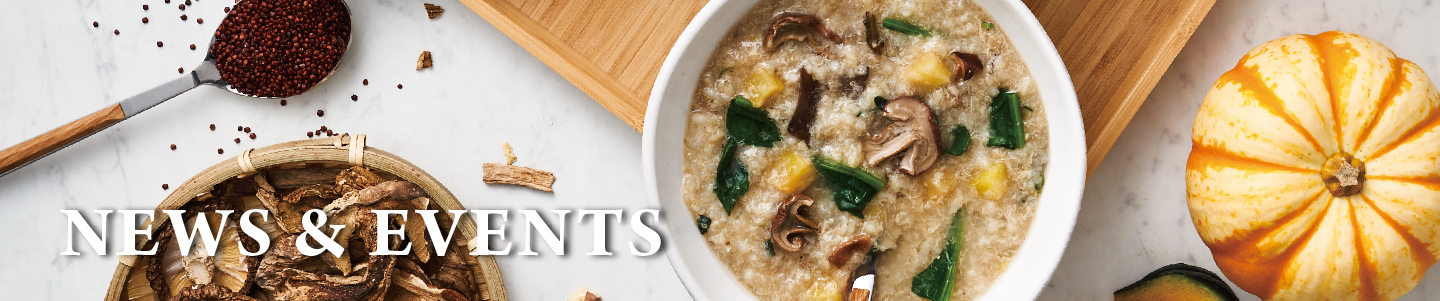
The biggest fear for vegetarian restaurant chains isn't bad food, but rather the "loss of consumer trust." A single instance of cross-contamination between meat and vegetables can cause almost irreparable damage to a vegan or religious vegetarian brand—which is why the first question that buyers of established vegetarian restaurant chains always ask when selecting suppliers is, "Is your production line completely independent?"
Table of Contents
Toggle
However, suppliers who truly achieve "completely independent physical factory areas" are few and far between. Most businesses operate on a "shared factory area, shared production line, and enhanced cleaning" basis—this might pass food safety inspections, but for customers who adhere to religious vegetarianism or veganism, even the slightest risk undermines their trust. This article, from the perspective of a chain vegetarian food supplier, breaks down four key factors for judging the reliability of a supplier's vegetarian production line, and explains how Lan Yang Foods uses them.Completely independent factory area + isolation of four major traffic flow linesAchieve zero cross-contamination.
Why is it so difficult for chain vegetarian restaurants to select side dish suppliers?
The selection criteria for side dish suppliers at chain vegetarian restaurants are at least one level higher than those at regular chain restaurants. There are three reasons for this:The cost of damaging consumer trust is high; the testing standards for vegetarian products are diverse; and the investment threshold for production line isolation is high..
The cost of destroying trust is high.| If a chain restaurant has a minor food safety issue, it can usually be fixed by changing suppliers and issuing a public apology. But vegetarian chains are different—once animal products are detected, the harm to vegans, religious vegetarians, and Halal vegetarians is at the level of values, and the damage to the brand is almost irreversible.
Diverse testing standards for vegetarian food categoriesThe testing standards for different vegetarian categories vary greatly: vegan, lacto-ovo vegetarian, vegetarian (containing five pungent spices), vegetarian (egg-side vegetarian), Halal vegetarian… each has its own corresponding ingredient list and processing requirements. Professional suppliers must be able to handle multiple vegetarian categories simultaneously and have clear certification endorsements.
Production line isolation has a high investment threshold.Achieving a truly "physically independent production line" means building a separate factory, hiring additional staff, and establishing separate raw material supply channels—a huge hurdle in terms of hardware investment and labor costs. Most businesses choose to "share production lines and enhance cleanliness" rather than invest in a separate factory, because the latter has a much higher financial threshold than the former.
With these three thresholds combined, there are very few suppliers in Taiwan who truly meet the procurement standards of chain vegetarian restaurants.
What are the four key factors to consider when determining whether a vegetarian independent production line is truly independent?
To determine whether a supplier's vegetarian production line is truly independent, buyers can use four key checks:Are the factory areas physically separated? Are the four main traffic flow lines separated? Does the factory possess vegetarian-specific certification? Is the B2C brand endorsed?.
Key Point 1 | Is the factory area physically separated?
It's not the same factory area, but rather "different areas" or "different times".Completely independent buildings or factory areasThis is the only way to completely eliminate the risk of trace cross-contamination. No matter how much cleaning is enhanced on shared production lines, trace cross-contamination cannot be completely eliminated—which is an unacceptable risk for brands that adhere to religious vegetarianism.
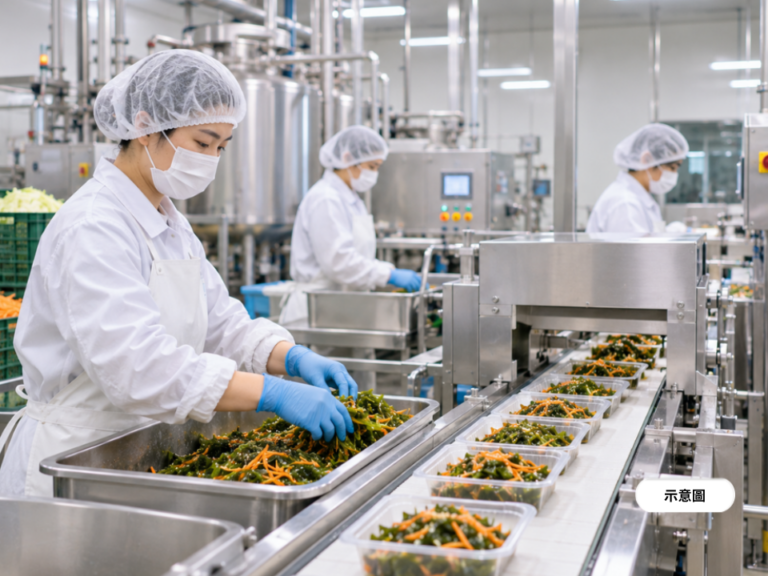
Taking Lanyang Foods as an example, its Yilan Plant 3 isA completely independent vegetarian-only factory areaIt is completely physically separated from Plant 2 (which processes aquatic products). Plant 2 specializes in processing aquatic products, while Plant 3 specializes in processing vegetarian products—they are not separate zones within the same factory area, but rather completely independent production spaces.
Key Point 2 | Are the four main traffic flow routes separated?
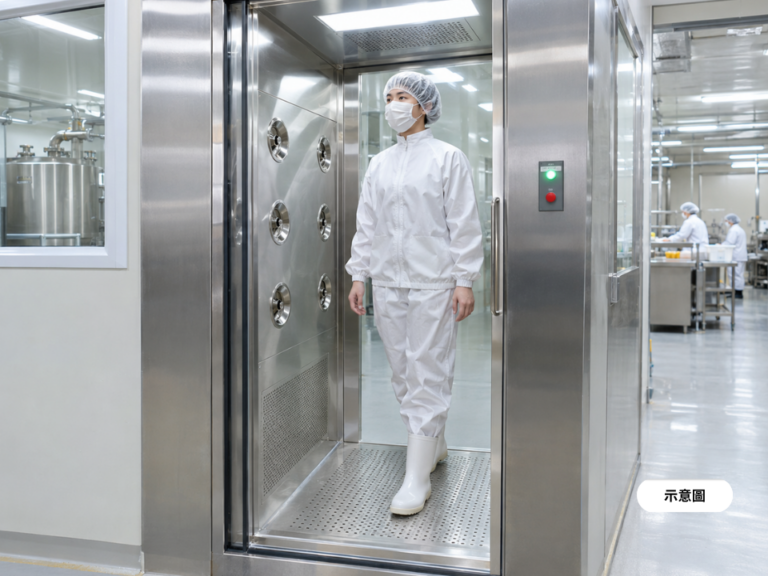
Professional food factories have four main flow lines: people, water, materials, and air. According to the Food and Drug Administration's "Guidelines for Workplace Flow Planning in Food Manufacturing," all four flow lines must be unidirectional and cannot intersect. Materials move from the pre-processing area to the packaging area, with cleanliness increasing as you go; personnel, wastewater, and air flow from areas with high cleanliness to areas with low cleanliness. Since these two directions do not intersect, contamination from the pre-processing area will not return to the finished product.
Taking Lanyang Foods as an example, the factory area is first divided according to product category: Factory 2 specializes in seafood, and Factory 3 specializes in vegetarian products. Each factory is further divided into clean areas and general work areas according to cleanliness. The direction of people, water, materials, and airflow is planned and implemented according to the above standards to prevent cross-contamination from the source. When purchasing customers visit the factory, they can personally confirm whether the flow of movement is clear.
Key Point 3 | Does it have a dedicated vegetarian certification?
There are two core certifications for vegetarian suppliers:Cleanliness label(The claim is that there are no additives and the raw materials are pure.)Halal certification(Covering the needs of Muslim vegetarians). These two documents can simultaneously address both the local vegetarian market in Taiwan and the international Muslim vegetarian market.
Lanyang Foods currently holds EU, Purple Halal, Kosher, ISO 22000, HACCP, SQF, and 100% additive-free cleanroom certifications. Its products...Red quinoa, taro and mushroom porridgeSelected as a "Silver-Friendly" product by the Ministry of Agriculture, and multiple vegetarian products have received awards. iTQi International Flavor EvaluationAccreditation – These certification combinations can support both domestic chain stores and export needs.
Key Point 4 | Does the B2C brand endorse its products/services?
This is an often overlooked but extremely important piece of evidence of trust—does the supplier itself have a B2C vegan brand?
For a supplier that only engages in B2B vegetarian wholesale, product quality can only be judged by purchasers through inspection reports. However, if the supplier also operates a B2C vegetarian brand, the products directly face end consumers and are subject to their taste and quality inspections—this means that the supplier's self-imposed standards for vegetarian quality are far higher than those for a purely B2B supplier.
Lanyang Foods' B2C brandLantian Vegetarian FoodBetween 2017 and 2018, the company expanded its operations, established an independent shopping cart, and focused on the retail and e-commerce market for small-package vegetarian food; it also expanded into physical concept stores.Slow-cooked Vegan Burger ShopSlow Food specializes in healthy vegetarian food, catering to a diverse clientele including healthcare professionals, fitness enthusiasts, yoga studios, and young adults. The philosophy Slow Food aims to convey is:"We don't force people to become vegetarians, but rather provide delicious, healthy, and convenient meals that non-vegetarians are also willing to try."This is also Lan Yang's core belief in vegetarian food.
What are the differentiators of the vegetarian production line at Lanyang Plant 3?
A site visit to the factory before deciding on a partnership is the most crucial verification step in the procurement process for vegetarian food chains. We recommend that buyers ask these 5 questions directly during the factory visit; within 3 minutes, you can assess the supplier's vegetarian production line capabilities:
Question 1 | Is the vegetarian production line a completely separate factory area, or is it physically isolated within the same factory area?
The answer is "completely independent" → further evaluation is possible.
The answer "isolation within the same factory area" → Not recommended for vegan chains, but worth considering for vegetarian chains with five pungent spices/vegan side dishes.
Question 2 | What are the flow design principles for the four main circulation routes (people, water, objects, and airflow)?
Able to answer specific flow direction → Mature production line management
If you can't answer or say "it's all very clean" → the circulation design is not implemented.
Question 3 | What certifications does the vegetarian product line currently have? Can I see the certificates?
At least a cleanroom label and an international certification (Halal/Kosher) are required.
Refuse to provide certificate → Exclude directly
Question 4 | "What are the main product categories? What is the production capacity?"
More product range and larger production capacity mean higher supply stability.
Limited product range → Risk of future expansion
Question 5 | Do you have a B2C vegetarian brand? Can I see their products?
Having a B2C brand and operating it continuously → High self-standards for the quality of vegetarian food.
No B2C brand → Needs to conduct more rigorous quality control on B2B shipments
When purchasing agents from chain vegetarian restaurants visit a factory, they should ask these 5 questions.
A site visit to the factory before deciding on a partnership is the most crucial verification step in the procurement process for vegetarian food chains. We recommend that buyers ask these 5 questions directly during the factory visit; within 3 minutes, you can assess the supplier's vegetarian production line capabilities:
Question 1 | Is the vegetarian production line a completely separate factory area, or is it physically isolated within the same factory area?
The answer is "completely independent" → further evaluation is possible.
The answer "isolation within the same factory area" → Not recommended for vegan chains, but worth considering for vegetarian chains with five pungent spices/vegan side dishes.
Question 2 | What are the flow design principles for the four main circulation routes (people, water, objects, and airflow)?
Able to answer specific flow direction → Mature production line management
If you can't answer or say "it's all very clean" → the circulation design is not implemented.
Question 3 | What certifications does the vegetarian product line currently have? Can I see the certificates?
At least a cleanroom label and an international certification (Halal/Kosher) are required.
Refuse to provide certificate → Exclude directly
Question 4 | "What are the main product categories? What is the production capacity?"
More product range and larger production capacity mean higher supply stability.
Limited product range → Risk of future expansion
Question 5 | Do you have a B2C vegetarian brand? Can I see their products?
Having a B2C brand and operating it continuously → High self-standards for the quality of vegetarian food.
No B2C brand → Needs to conduct more rigorous quality control on B2B shipments
FAQ
Q1 | If a restaurant only offers vegetarian dishes on part of its menu (such as vegetarian side dishes or vegetarian dishes with five pungent spices), does the supplier have to have an independent production line?
It depends on the strictness of the target customer group. If the restaurant's vegetarian menu is for religious vegetarian customers (Buddhist vegan, Muslim Halal vegetarian), it is strongly recommended to choose an independent production line supplier; if it is for general health vegetarian or lacto-ovo vegetarian customers, suppliers that share production lines and enhance cleaning can also be considered, but it is still recommended to conduct regular spot checks for confirmation.
Q2|What are the differences in the procurement SOPs between chain vegetarian restaurants and regular chain restaurants?
The main differences are in three aspects: (1) There is an extra layer of certification inspection - in addition to HACCP and ISO 22000, it is also necessary to check the clean label and the corresponding vegetarian category; (2) There is an extra layer of factory inspection - not only to check hygiene and quality control, but also to confirm the physical isolation of the vegetarian production line; (3) There is an extra layer of contract terms - it is necessary to add a "vegetarian purity commitment" and a foreign matter detection and handling mechanism.
Q3 | The supplier said, "Our vegetarian production line only operates on weekends and not on weekdays." Does this count as an independent production line?
No. Separating time slots cannot eliminate the risk of equipment residue and cross-contamination from airflow. When selecting suppliers, chain vegetarian restaurants should insist on "physically independent factory areas" and not accept solutions involving separate time slots.
Conclusion | Trust in vegetarian chains is built on the details of physical separation.
The brand trust built by vegetarian restaurant chains is not achieved through marketing, but rather through the accumulation of every step of the supply chain, every certification, and every raw material inspection. Physically independent production lines, the design of four separate production lines, and the self-inspection of the B2C brand—these unseen details are the hidden foundation for the long-term operation of vegetarian restaurant chains.
Lanyang Foods Yilan Plant 3 is completelyWith its own dedicated vegetarian factory area, coupled with its B2C retail brand Lantian Vegetarian and the physical concept store Manxiang Vegetarian Burger, the company provides a complete vegetarian product system from B2B chain supply to B2C end-user verification. Chain vegetarian buyers are welcome to contact the sales team through the official website to arrange on-site factory visits or online communication.
Further reading
Recommended restaurant side dish supplier: [Lanyang Foods]
Founded in 1984, Lan Yang Foods has now entered its 40th year. It is not only a Taiwanese brand but also an internationally renowned enterprise. We have built a food safety protection network in sync with the world, and have fully implemented… FSSC 22000,ISO 22000,HACCPFurthermore, through extremely rigorousEUCertified by the EU Food Safety Management System, and successfully exported to over 30 countries. Furthermore, many products have passed cleanliness verification, Halal certification, Kosher certification, and have won international flavor awards. We uphold the highest international standards to safeguard the trust of our domestic and international partners, ensuring that every batch of our products shipped overseas becomes a source of pride for Taiwan.
At Lan Yang Foods' production plant, every step of the process strictly adheres to Good Food Practices (FGMP) and Standard Sanitation Operating Procedures (SSOP). From farm to table, through the most rigorous and meticulous quality control, we ensure that every consumer can experience genuine safety, hygiene, and peace of mind while enjoying the delicious food.
If you have group purchase or wholesale needs, please feel free to contact Lan Yang Foods. You can call 02-2586-2555 #128 or add us as a friend on LINE on the right to inquire.