
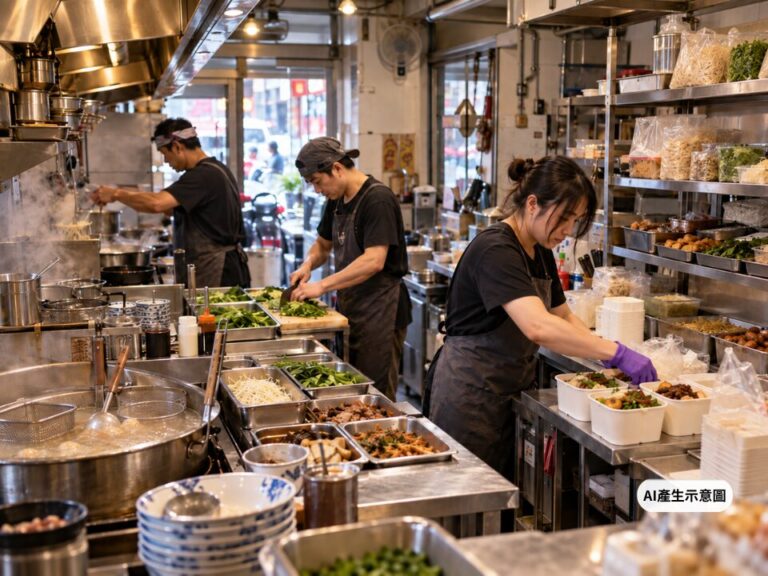
When opening a new snack shop, a very real problem often arises:The menu was planned out, but once we actually started operating, we realized we didn't have enough staff.
Table of Contents
ToggleIn the morning, I have to wash and chop vegetables, make soup, braise meat, and prepare sauces. At noon, I have to cook noodles, pack rice, pack takeout, and settle accounts. In the evening, I also have to clean and prepare ingredients for the next day.
If there are only 2 to 3 people, and all the dishes are made by themselves from the ingredients, it is easy to become too busy even before peak hours.
Therefore, when a snack shop is short-staffed, the food can be divided into three categories:Items that must be cooked by yourself, can be prepared in advance, and are suitable for being handled by suppliers.
Signature dishes, try to master them yourself.
The most worthwhile investment of manpower is in the dishes that customers will come specifically for.
For example, the broth and beef in a beef noodle shop, the braised pork in braised pork rice, the chicken and sauce in chicken rice, as well as the shop's signature chili sauce and dry-mix sauce.
These dishes directly influence customers' impressions of the restaurant and are the easiest part to differentiate a business.
If a beef noodle shop's specialty is its broth, it should prioritize its limited manpower on making the broth, the quality of the meat, and the main dishes, rather than spending a lot of time every day preparing a dozen or so side dishes.
In short:
The dishes that will determine whether a customer will come back next time should be prepared by the customer themselves first.
For repetitive tasks, materials can be prepared in advance.
Another type of work, although it needs to be done every day, does not necessarily need to be done only after a customer places an order.
For example, scallions, cilantro, chopped vegetables, portioned meat, portioned sauces, and side dishes for set meals can all be prepared in one go before opening the store or during off-peak hours.
The key is to standardize the process.
For example, the amount of sauce used in a bowl of dry noodles and the amount of side dishes served with a set meal can be preset to form:
Centralized material preparation → Fixed serving size → Peak-speed meal preparation
In this way, during the busiest times of lunch and dinner, manpower can be concentrated on cooking, plating and serving the main dishes, without having to cut ingredients and season them again while taking orders.
For side dishes that aren't part of the signature menu, external sourcing can be evaluated.
The most easily underestimated labor costs often come from the side dishes that are "not the main dish, but need to be prepared every day".
For example, even though the restaurant's main dish is beef noodles, they also prepare different side dishes such as lotus root, burdock, mushrooms, and kelp every day.
A single dish may seem simple, but if there are 5 to 10 different kinds, it can involve a lot of trouble:
Purchasing, cleaning, cutting, cooking, seasoning, cooling, packaging, plus cleaning utensils.
For a small shop with only two or three people, these tasks accumulate to be quite time-consuming.
Therefore, if side dishes primarily serve as accompaniments rather than being the restaurant's signature dish, then their use can be evaluated.Side dishes for business.
For example, adopting:
We make our own signature side dishes and source our complementary side dishes from suppliers.
This retains the restaurant's unique characteristics while reducing the manpower required for washing, cutting, cooking, and seasoning.
How do I decide whether or not I should do it myself?
You can ask three questions first:
First, would customers come specifically to eat it?
If you know how, do it yourself first.
Secondly, is it very time-consuming, yet not a specialty of the restaurant?
If a lot of washing, cutting, and seasoning are required every day, but these are only side dishes in a set meal, then standardization can be considered.
Third, is it really cheaper to make it yourself?
Costs should not be judged solely on raw materials; labor, waste, utilities, preparation and cleaning time must also be taken into account.
Some side dishes use inexpensive ingredients, but require employees to spend a lot of time processing them every day, so the actual cost may not be low.
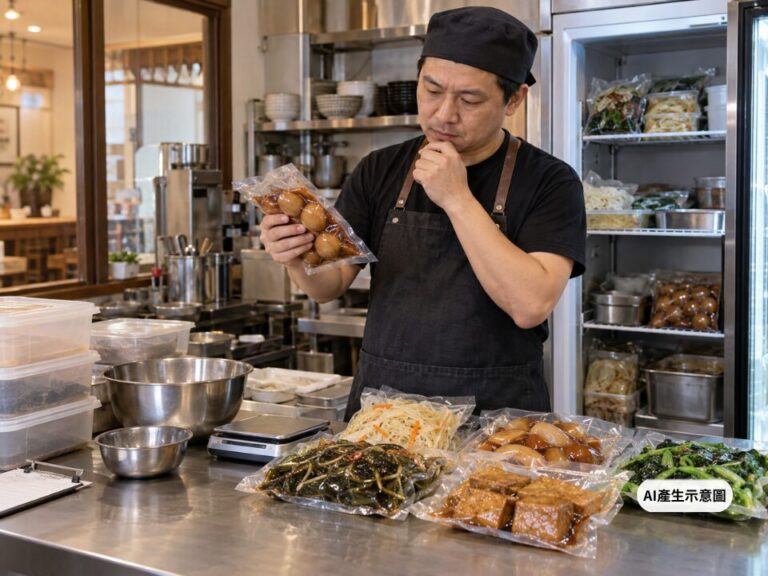
When looking for a restaurant side dish supplier, you should first check the actual usage.
SearchRestaurant side dish supplierWhen buying, you don't necessarily have to buy the most at once. Instead, you should first confirm the product specifications, how many portions a package can be divided into, the storage method, the number of boxes to be filled, and your own refrigeration or freezing space.
The amount of food a noodle shop serves 50 customers a day and a bento shop that makes hundreds of meals a day require completely different purchasing quantities.
Therefore, rather than simply comparing "how much per kilogram", it is more practical to calculate:
How many servings can be made from one pack? What is the average cost per serving?
Why should we consider Lanyang Foods' side dishes?
For snack shops, side dishes not only reduce the amount of ingredients needed, but more importantly, they offer consistent quality and can complement the main course.
Lanyang Foods emphasizes consistent flavor and quality in its side dishes, ensuring they don't overshadow the main course while retaining their own memorable features. This has made them popular with large restaurant chains.
For businesses with a smaller workforce, standardized products can reduce the taste differences caused by different employees preparing the food, allowing beef noodle shops, bento shops, and casual dining restaurants to dedicate more manpower to their signature dishes.
What should I do myself? Quickly organize.
Meal items | Suggested approach |
Signature soup base, braised meat, beef | Cook by yourself |
Shop's signature sauce | Make it yourself |
Freshly cooked noodles and fried foods | Live cooking |
Scallions, basic ingredients | Prepare materials in advance |
Sauces and fixed side dishes | Pre-package |
Non-signature cold side dishes | Commercially available side dishes can be assessed |
Items that are used in small quantities and require a lot of labor | Procurement or simplification |
Recommended restaurant side dish supplier: [Lanyang Foods]
Founded in 1984, Lan Yang Foods has now entered its 40th year. It is not only a Taiwanese brand but also an internationally renowned enterprise. We have built a food safety protection network in sync with the world, and have fully implemented… FSSC 22000,ISO 22000,HACCPFurthermore, through extremely rigorousEUCertified by the EU Food Safety Management System, and successfully exported to over 30 countries. Furthermore, many products have passed cleanliness verification, Halal certification, Kosher certification, and have won international flavor awards. We uphold the highest international standards to safeguard the trust of our domestic and international partners, ensuring that every batch of our products shipped overseas becomes a source of pride for Taiwan.
At Lan Yang Foods' production plant, every step of the process strictly adheres to Good Food Practices (FGMP) and Standard Sanitation Operating Procedures (SSOP). From farm to table, through the most rigorous and meticulous quality control, we ensure that every consumer can experience genuine safety, hygiene, and peace of mind while enjoying the delicious food.
If you have group purchase or wholesale needs, please feel free to contact Lan Yang Foods. You can call 02-2586-2555 #128 or add us as a friend on LINE on the right to inquire.